Your ATS Was Built for You, Not Your Candidates. Here's the Gap.
94% of recruiters say their ATS has improved hiring. 75% of candidates never hear back. Here's why the gap exists and what it's actually costing you.
Internal Team
Your ATS is one of the best investments your recruiting team has made. It’s also completely invisible to your candidates. That’s the problem.
94% of recruiters say their ATS has had a positive impact on their hiring process. Ask candidates the same question and you get a different answer. 75% of applicants never hear back after submitting a resume. 65% don’t receive consistent communication throughout the process.
The ATS didn’t fail recruiters. It was never built for candidates in the first place.
Built for One Side of the Table
An ATS does exactly what it was designed to do: help recruiters post jobs, parse resumes, move candidates through stages, and keep the pipeline organized. It’s a pipeline management tool. The recruiter is the user. The candidate is the data.
That distinction matters because it shapes what gets built. 75% of recruiters say their ATS helps strengthen the candidate experience. But “strengthening candidate experience” from the recruiter’s side means faster screening, better collaboration, cleaner handoffs. It has nothing to do with what the candidate actually feels on the other end.
The candidate submits their application and waits. Days pass. Sometimes weeks. They have no login. No dashboard. No status. Just a confirmation email and silence.
The Visibility Gap
Everything a recruiter sees in their ATS, the stage a candidate is in, who’s interviewing them, what the next step is, what the timeline looks like, is entirely hidden from the person it’s about.
The average U.S. hiring process now takes 45 to 50 days. Candidates are expected to stay engaged, turn down competing offers, and show up prepared through multiple rounds, all without any real-time information about where they stand.
72% of job seekers report negative mental health impacts from long hiring processes and poor communication. That’s not a candidate attitude problem. That’s what happens when you ask someone to wait in the dark for two months.
The information exists. It lives in your ATS. It just never reaches the people it’s about.
What This Costs You
The visibility gap isn’t just a candidate welfare issue. It’s a business problem.
42% of candidates decline offers due to a bad interview experience. Replacing a single employee costs 50 to 200% of their annual salary. When candidates disengage mid-process because they felt forgotten, you don’t just lose them. You restart a hiring cycle that was already expensive.
ATS adoption among mid-size companies hit 80% in 2025. The technology is nearly universal. The candidate experience hasn’t kept pace.
The Fix Isn’t a New ATS
Replacing your ATS won’t solve this. The problem isn’t the tool. It’s that the tool was designed with one user in mind.
The fix is giving candidates a window into the process that already exists. Not a weekly email template. Not a “we’re reviewing your application” autoresponder. Actual visibility into where they stand, what stages are left, and who’s involved.
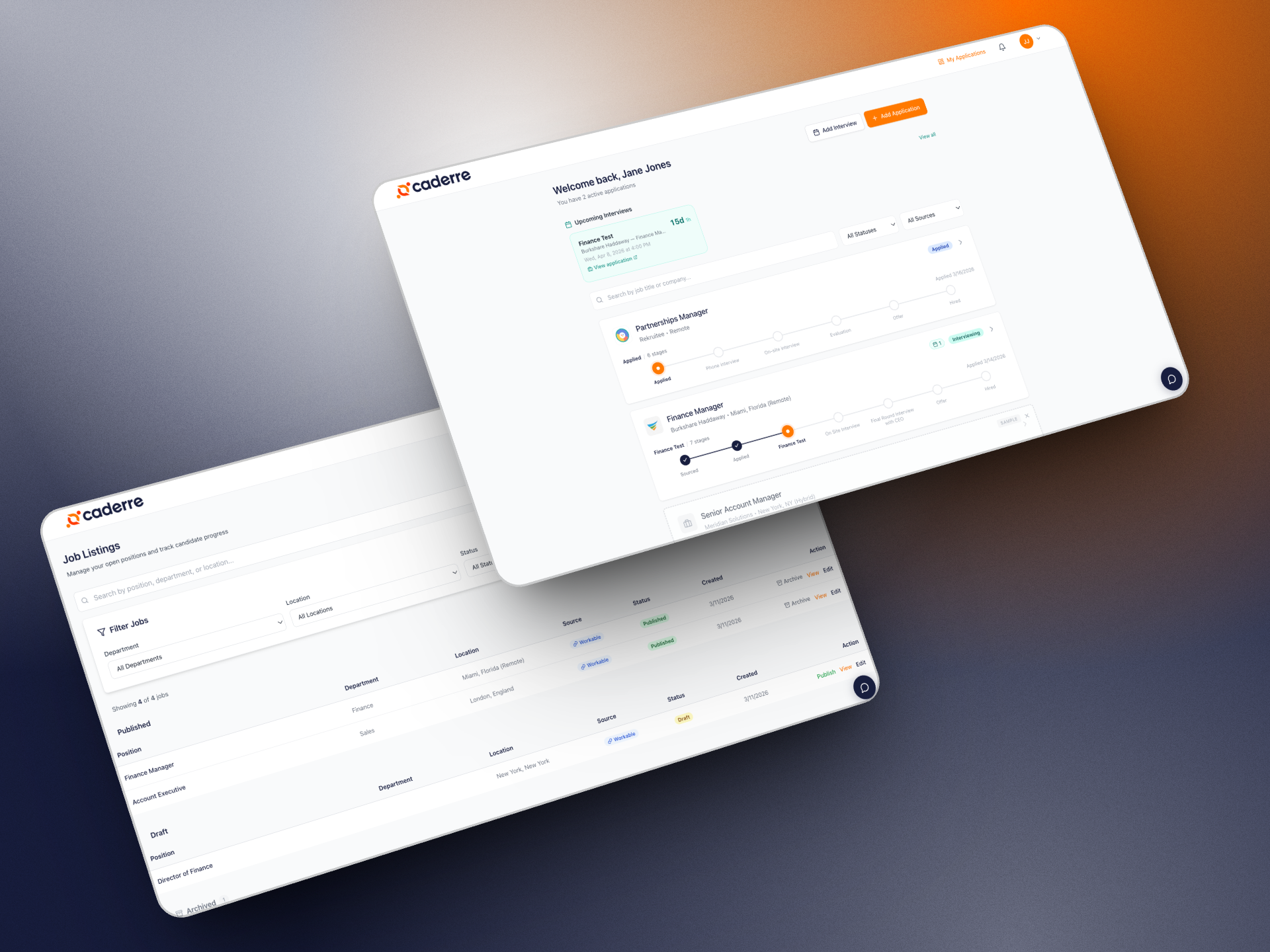
That’s what Caderre does. It connects to your existing ATS and surfaces the information candidates are already waiting for, without adding anything to your team’s plate. See how it works →
See Caderre in action
Connect your ATS and give candidates real-time visibility into their application status. Free 14-day trial, no credit card required.
Start free trialShare this article