Your Riskiest Rejection Already Works for You
Rejected internal applicants are nearly twice as likely to quit. Why silence, not the rejection, drives them out, and how transparency protects retention.
Internal Team
Most candidate experience advice is about people outside your company. The applicant who never hears back. The finalist who goes quiet after a strong interview. But your highest stakes candidate is often someone who already badges in every morning.
When an employee applies for an internal role and the process goes dark, the cost is not a bad review. It is a resignation.
The Internal Applicant Is a Different Kind of Risk
Reject an external candidate badly and they move on. They might leave a review. They probably tell a few people. Reject an internal candidate badly and the person stays in the building, and what they do next shows up in your turnover numbers.
The research is blunt. Employees who are rejected for an internal role are nearly twice as likely to leave the company as those who were hired or never applied. In the underlying study of more than 100 firms, the turnover rate for rejected internal candidates was 14 percent, against a company wide rate of 4 percent.
These people are not quitting out of spite. They read the rejection as a verdict on their future. If there is no visible path up, the rational move is to look elsewhere.
Silence Is the Part That Does the Damage
The rejection itself is not always what pushes someone out the door. The signal around it is.
The same research found that internal candidates who reached the hiring manager interview were 1.4 times less likely to quit, even when they did not get the job. Getting that far told them they were taken seriously and that similar roles were within reach. The employees who leave are the ones left guessing. Passed over with no visibility into whether they were ever truly in the running, or whether the decision was made before they applied.
When the process is invisible, people fill the silence with the worst interpretation. Not “I came up short this time,” but “I have no future here.”
A Rejection Note Is Not Enough
It would be easy to assume internal applicants simply need more communication. They already get more than most. Roughly 65 percent of North American employers give feedback to internal candidates, compared with just 17 percent for external applicants. And internal candidates still leave at elevated rates.
So a form email closing the loop does not solve it. What changes the calculus is whether the employee could see that the process was real and fair, that they advanced, and that they were genuinely considered. Visibility does what a note cannot. It replaces a private worst case story with a clear, shared record of what actually happened.
How Caderre Helps
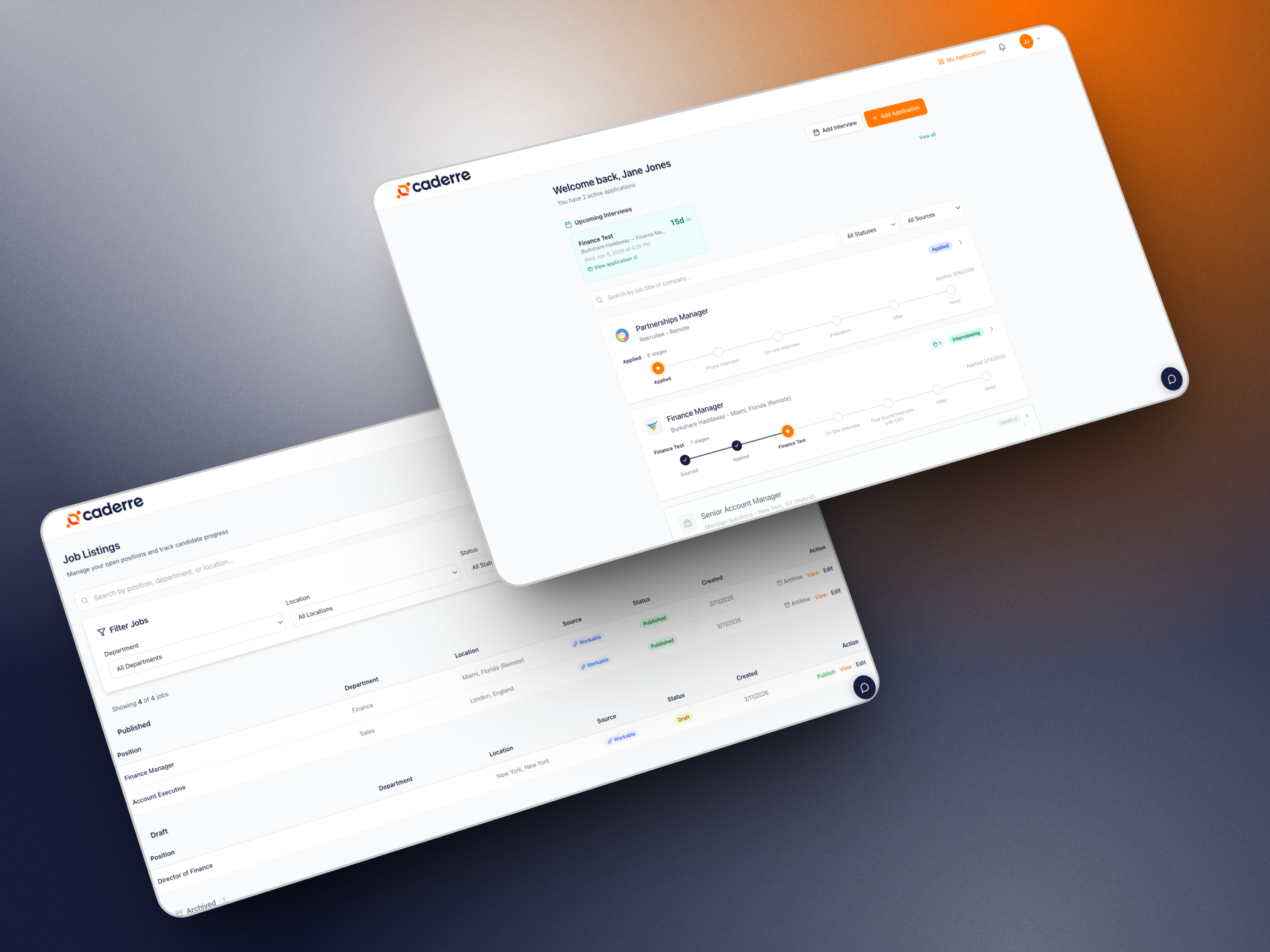
Internal applicants are candidates in your ATS too. Caderre connects your ATS to a candidate facing dashboard, so an employee applying for an internal role sees exactly where they stand in real time, through every stage and including the outcome. No black hole for the person who sits three desks away.
They can see that they reached the hiring manager stage. They can see the result when it lands. They leave the process knowing they were taken seriously, not wondering whether they ever had a chance.
That visibility is what protects retention. The employee you could not promote this quarter stays engaged instead of quietly deciding the ceiling is fixed. For internal candidates, transparency is not only good manners. It is one of the cheapest retention levers you have.
See Caderre in action
Connect your ATS and give candidates real-time visibility into their application status. Free 14-day trial, no credit card required.
Start free trialShare this article