The Hiring Manager Bottleneck: Why Candidates Wait in Silence
Most candidate silence is not a recruiting failure. It is a feedback bottleneck between interview and decision, and candidates cannot tell the difference.
Internal Team
A candidate finishes a final-round interview on Tuesday. The recruiter sends a thank-you note that afternoon. Then nothing happens for three weeks.
From the outside, it looks like the company went cold. On the inside, the recruiter is chasing two interviewers for scorecards and waiting on a hiring manager who is traveling, buried in a launch, or quietly hoping a stronger candidate appears.
Most candidate silence is not a recruiting failure. It is a feedback bottleneck, and candidates have no way to tell the difference.
The Wait Lives Between Interview and Decision
In a Robert Half survey of 9,000 jobseekers across 11 countries, 55 percent said they had waited more than a month to hear back after interviewing for a role. Nearly a third had waited more than six weeks. Only 8 percent heard back the same day.
That gap rarely sits with the recruiter. It sits with the people the recruiter is waiting on: interviewers who have not submitted scorecards, a hiring manager who has not made the call, a panel that has not found time to debrief. In GoodTime’s 2026 Hiring Insights Report, 31 percent cited hiring manager availability as a scheduling burden, and 60 percent of companies said time to hire increased in 2025.
What the Wait Costs
Candidates do not wait patiently. The same Robert Half research found that 67 percent of jobseekers had accepted a second-choice offer because their preferred employer took too long to decide. Earlier Robert Half data showed nearly a quarter of candidates lose interest if they hear nothing within a week of an interview, and another 46 percent lose interest after one to two weeks without a status update.
Notice the wording. Without a status update, not without a decision. Candidates can tolerate a slow process. What they cannot tolerate is not knowing whether the process is still happening.
Why Recruiters Go Quiet Too
Recruiters know all of this. The problem is that there is nothing new to say. Another “still waiting on the team” email feels awkward, so many recruiters hold off until there is real news. Multiply that across dozens of open candidates and the default becomes silence.
Meanwhile the inbox fills with “any update?” messages, each one a reminder of a delay the recruiter does not control.
Make the Wait Visible
Pushing hiring managers to move faster helps. Scorecard deadlines and scheduled debriefs should be standard. But even fast teams have slow weeks. The more durable fix is to stop letting internal delays turn into external silence.
A candidate who can see that their application is in team review, and that the process is still active, reads the wait very differently from one staring at an empty inbox. The delay is the same. The experience is not.
How Caderre Helps
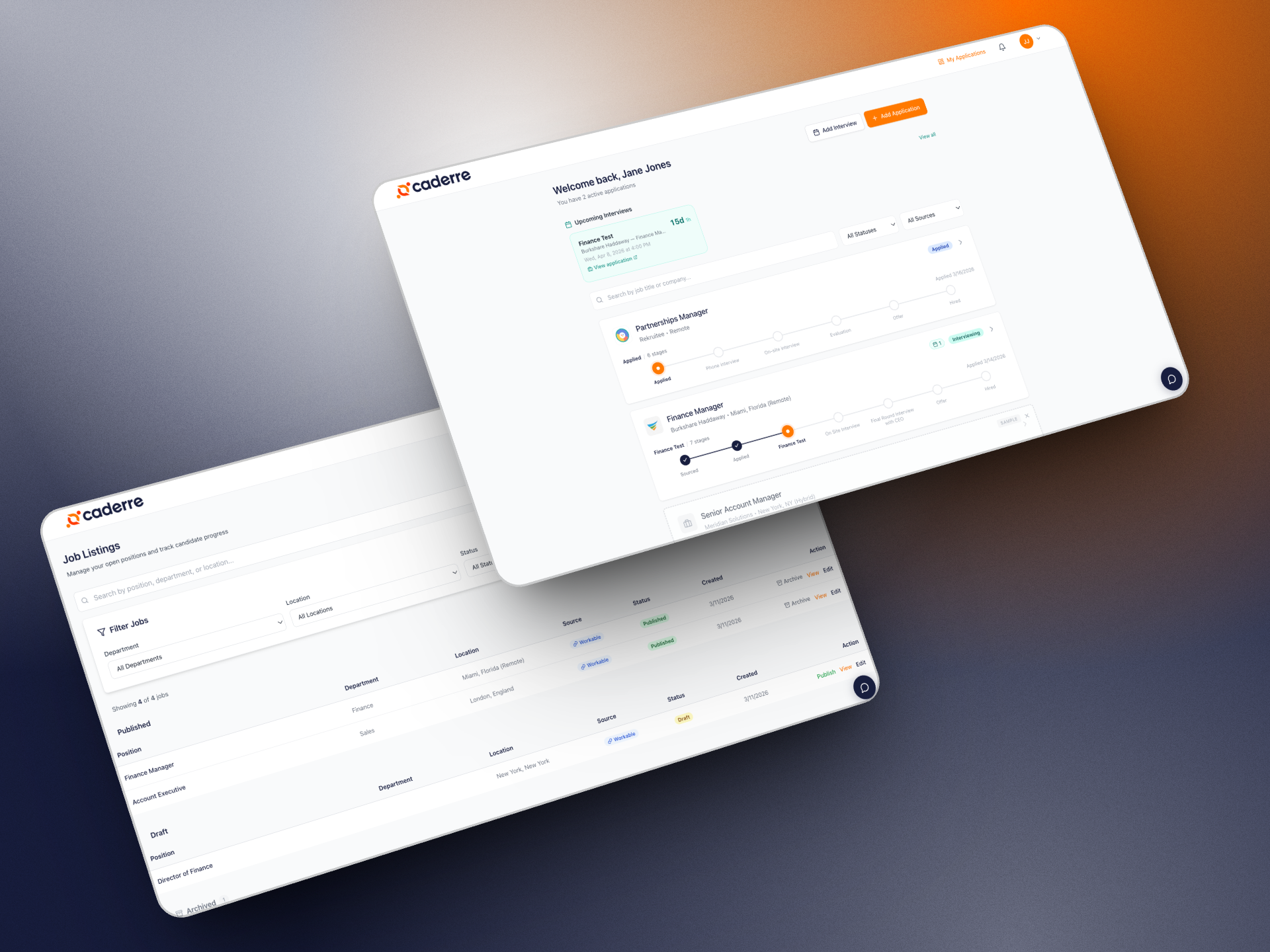
Caderre connects to your ATS and gives every candidate a real-time status dashboard. When an application moves to a new stage, the candidate sees it. When it sits in review, they can see it is still in review, without a recruiter writing a single holding email.
The hiring manager gets the time the decision needs. The recruiter stops fielding status check-ins. And the candidate waits with confidence instead of quietly accepting the offer that arrived first.
Slow decisions are sometimes unavoidable. Silent ones are a choice.
See Caderre in action
Connect your ATS and give candidates real-time visibility into their application status. Free 14-day trial, no credit card required.
Start free trialShare this article