Why Your Best Candidates Drop Out Before the Offer
The strongest candidates withdraw first. Not because they dislike you, but because silence lets competing offers win. Here is what closes the gap.
Internal Team
The candidates you most want to hire are the ones most likely to leave before you decide.
That is not a loyalty problem. It is a math problem. The strongest candidates have options, and options have expiration dates.
93% of hiring managers say the process takes longer than it did two years ago (Robert Half, 2025). Meanwhile, top talent is typically off the market within about 10 days (SHRM), while the average time to hire sits at around 44 days (iCIMS, 2025). The gap between those two numbers is exactly where your best candidates disappear.
The Best Candidates Have the Least Patience
Every candidate is evaluating you while you evaluate them. The difference is that strong candidates can act on what they find.
The interview stage alone accounts for 32% of all candidate drop-off (iCIMS, 2025), more than application abandonment and scheduling friction combined. And it is rarely the weakest candidates who walk. The people with the most in-demand skills are running several processes at once. When yours goes quiet, theirs is the first to find a faster alternative.
A long process does not just risk losing a candidate. It selectively loses the ones you wanted most.
They Are Not Leaving Because They Dislike You
Here is the part that surprises most recruiters.
In one 2025 benchmark, Technology and SaaS roles posted the highest candidate withdrawal rate at 13.5%, even though the candidates who withdrew still rated their experience positively (Starred, 2025). They liked the company. They liked the people they met. They left anyway.
The reason was not dissatisfaction. It was a lack of momentum. When days pass with no word, candidates do not assume you are busy. They assume they are out. Silence reads as a decision, even when no decision has been made.
That is why poor communication is consistently the top reason candidates give for withdrawing, named by 47% of job seekers in one survey (Monster, 2024). The problem is almost never that you rejected them. It is that you said nothing, and they filled the silence themselves.
The Fix Is Visibility, Not Just Speed
You cannot always make hiring faster. Approvals take time. Panels have calendars. Reference checks are not optional. Some of those 44 days are simply the cost of doing the job well.
But the damage from a slow process does not come from the time. It comes from the silence inside the time. A candidate who can see that they are still under consideration, where they stand, and what happens next does not read a quiet week as a rejection. They wait, because they have a reason to.
The goal is not to eliminate the gap. It is to make sure the candidate is never guessing what the gap means.
How Caderre Helps
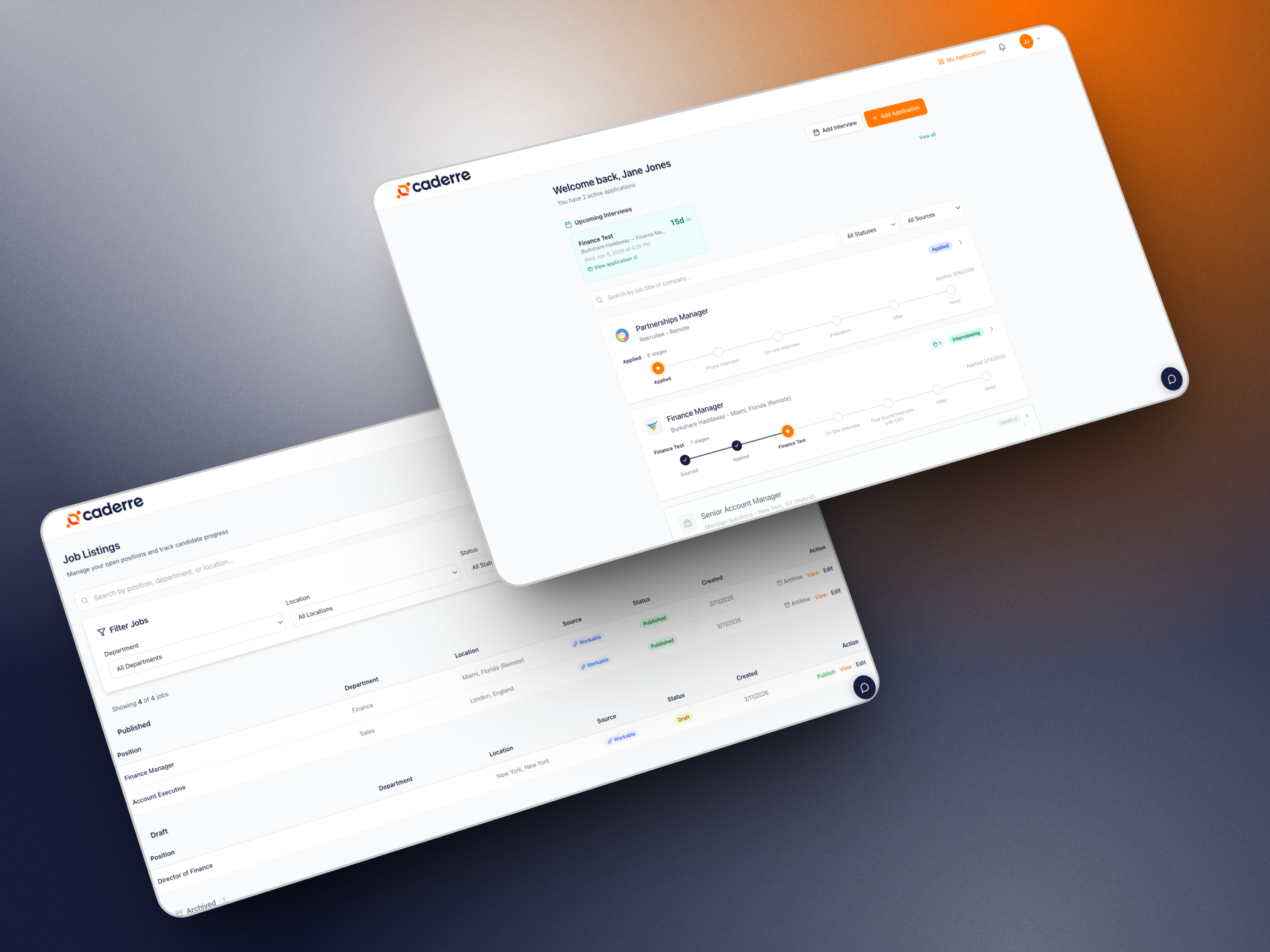
This is what Caderre is built for. Caderre connects to your existing ATS and gives every candidate a real-time view of where they stand. As a candidate moves through your stages, their status updates from the system your team already uses. No extra emails, no manual chasing, no recruiter spending an afternoon answering “any update?”
The result is a process that can take the time it needs to take, without leaving your best candidates to fill the silence with someone else’s offer.
The candidates worth competing for are the ones who leave first. Visibility is how you keep them in the room long enough to make them an offer.
See Caderre in action
Connect your ATS and give candidates real-time visibility into their application status. Free 14-day trial, no credit card required.
Start free trialShare this article