Why Candidates Renege After Accepting Your Offer
An accepted offer is no longer a commitment. Reneging is rising, it peaks in the silent weeks between yes and day one, and visibility is what keeps new hires from walking before they start.
Internal Team
The offer letter is signed. The requisition is closed. The hiring manager has been told the search is over. Then, two weeks before the start date, a short email arrives. The candidate has decided to go another direction.
This is reneging, and it is happening more often. A signature used to mean the process was finished. Now it marks the start of a second, quieter competition for the same candidate, one that plays out entirely in the window between “yes” and day one.
The Signature Stopped Meaning What It Used To
In a Gartner study of 3,500 job seekers, 51% of new hires either declined the offer or ghosted the employer after accepting it. That figure was 36% in 2019 and 44% in 2022. The trend has moved in one direction, and it has moved fast.
The takeaway for talent teams is uncomfortable. An accepted offer is no longer a commitment. It is conditional interest that has to be protected until the candidate actually walks through the door.
Why Candidates Say Yes, Then Walk
Reneging is rarely a snap decision. It builds over the weeks after acceptance, and three forces drive most of it.
A better offer arrives. RippleMatch research found that compensation is the top reason candidates back out. Strong candidates are rarely running a single process, and a higher number or a counteroffer can reopen a decision they thought was made.
Doubt grows in the silence. Candidates accept offers on incomplete information. When the weeks that follow are quiet, they start to question whether the role is what they were told it was, and whether the company that has gone dark is the one they want to join.
The gap is too long. NACE data shows that as the lag between offer and start date grows, renege rates climb with it. Every additional week of waiting is another week for a competitor to make a move.
The behavior is most pronounced among early-career talent. According to Handshake research, 44% of students now see accepting more than one offer as reasonable, up from 35% two years earlier, and only 6% say they would never renege. For a generation that watched companies rescind offers during downturns, a signed letter is treated as one option among several.
The Real Cost of a Reneged Offer
A renege is more expensive than a rejection earlier in the funnel. The req has to reopen. The runner-up has often taken another job. The hiring manager, who was told the seat was filled, now has to wait again. Weeks of work reset to zero at the worst possible moment.
And the risk does not end on the start date. Korn Ferry reports that 15% of new hires leave within their first 90 days. The period between acceptance and the first few months on the job is fragile, and it is largely invisible to teams that treat the offer as the finish line.
Silence Is the Common Thread
Better offers and long start dates are real, but they are not the whole story. What turns a moment of doubt into a renege is the same thing that loses candidates earlier in the process: silence.
A candidate who hears nothing for three weeks does not assume the company is busy. They assume the enthusiasm was one-sided. The quiet stretch after acceptance gives every competing offer room to look better and every second thought room to grow. By the time the renege email is sent, the decision was usually made days earlier, in the absence of any reason to stay engaged.
This is the most expensive version of a problem that runs through the entire hiring process. Candidates left in the dark fill the silence themselves, and they rarely fill it in the company’s favor.
Visibility Does Not End at the Offer
Keeping a candidate engaged after they accept is not about grand gestures. It is about making sure they never have to wonder where things stand. A process that stays transparent through the offer stage signals a company that communicates, which is exactly the reassurance a wavering candidate is looking for.
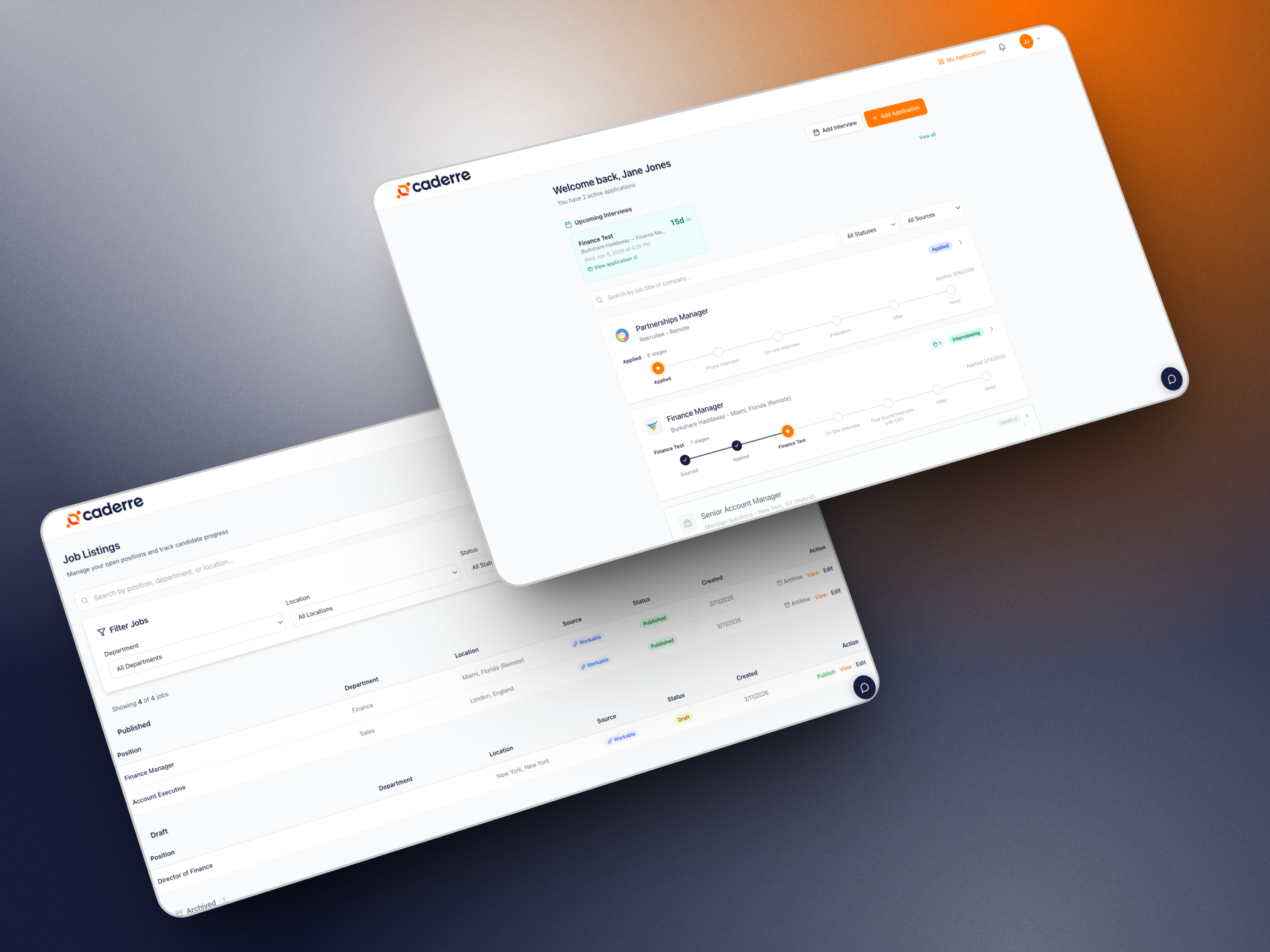
This is what Caderre is built for. Caderre connects to the ATS a team already uses and gives candidates a real-time view of where they stand across the full hiring lifecycle, through the offer and acceptance stages, not just the early rounds. The candidate can see that they are still moving forward, and the recruiter does not have to manufacture check-ins to prove it.
A candidate who has been informed the whole way, and who can still see the process working after they say yes, has far fewer reasons to drift. The offer is not the finish line. Visibility is how a company stays in the race until the candidate is at the desk.
See Caderre in action
Connect your ATS and give candidates real-time visibility into their application status. Free 14-day trial, no credit card required.
Start free trialShare this article