What AI Hiring Tools Are Getting Wrong
AI is reshaping recruiting. But most of the investment is going toward automating recruiter tasks, not improving the experience for candidates. Here's what that gets wrong.
Internal Team
Recruiters are getting AI tools. Candidates are getting silence.
That’s the disconnect no one in HR tech is talking about. The last two years have produced a wave of AI recruiting products — resume screeners, job description generators, interview question banks, scheduling bots. Most of them do one thing: help recruiters move faster.
That’s not a criticism. Speed matters. But faster processing without better communication just means candidates get rejected faster without knowing why.
The AI Recruiting Stack Is Recruiter-Facing
The platforms getting the most funding and attention right now are built for the hiring team. AI sourcing tools surface candidates from LinkedIn and job boards. AI screening tools rank applications by fit score. AI interview tools transcribe and summarize calls.
None of that is visible to the candidate.
From the applicant’s side, the process still looks exactly the same as it did five years ago. Submit a resume, get an auto-confirmation, wait. 58% of candidates say they never receive any status update after applying, regardless of what tools the company is using on the backend (Greenhouse, 2024).
The sophistication of your recruiting stack has no bearing on what candidates actually experience.
Speed Without Transparency Creates a Different Problem
When AI tools help recruiters screen faster, application volume can spike. More candidates applying, more getting screened and rejected, more falling into the communication gap.
77% of job seekers say the candidate experience is the clearest signal of how a company treats its employees (LinkedIn, 2024). If candidates are being processed in bulk and hearing nothing, the takeaway isn’t that your company is efficient. It’s that your company doesn’t communicate.
That perception follows you. Candidates talk. They leave Glassdoor reviews. They tell their networks. And they remember when they’re the ones doing the hiring.
What Candidates Actually Need
Candidates don’t need AI to write them a more personalized rejection letter. They need to know where they stand.
When do they move forward? When does a decision get made? Are they still in consideration? These questions don’t require AI to answer. They require visibility.
The information already exists in your ATS. Every stage change, every status update, every decision gets logged. The problem is that it stays there, visible only to the people on your team who already know the answer.
Giving candidates access to that information doesn’t require a new AI product. It requires connecting what your ATS already tracks to a dashboard candidates can actually see.
The Hiring Experience Is a Brand Decision
Companies spending six figures on AI recruiting tools are often spending nothing on making the candidate experience better. That’s a mismatch worth examining.
The ROI on candidate experience is real. Companies with strong employer brands see 50% lower cost-per-hire and attract twice as many applicants (LinkedIn, 2025). The candidate who doesn’t get the job still forms an opinion of your company. That opinion is worth protecting.
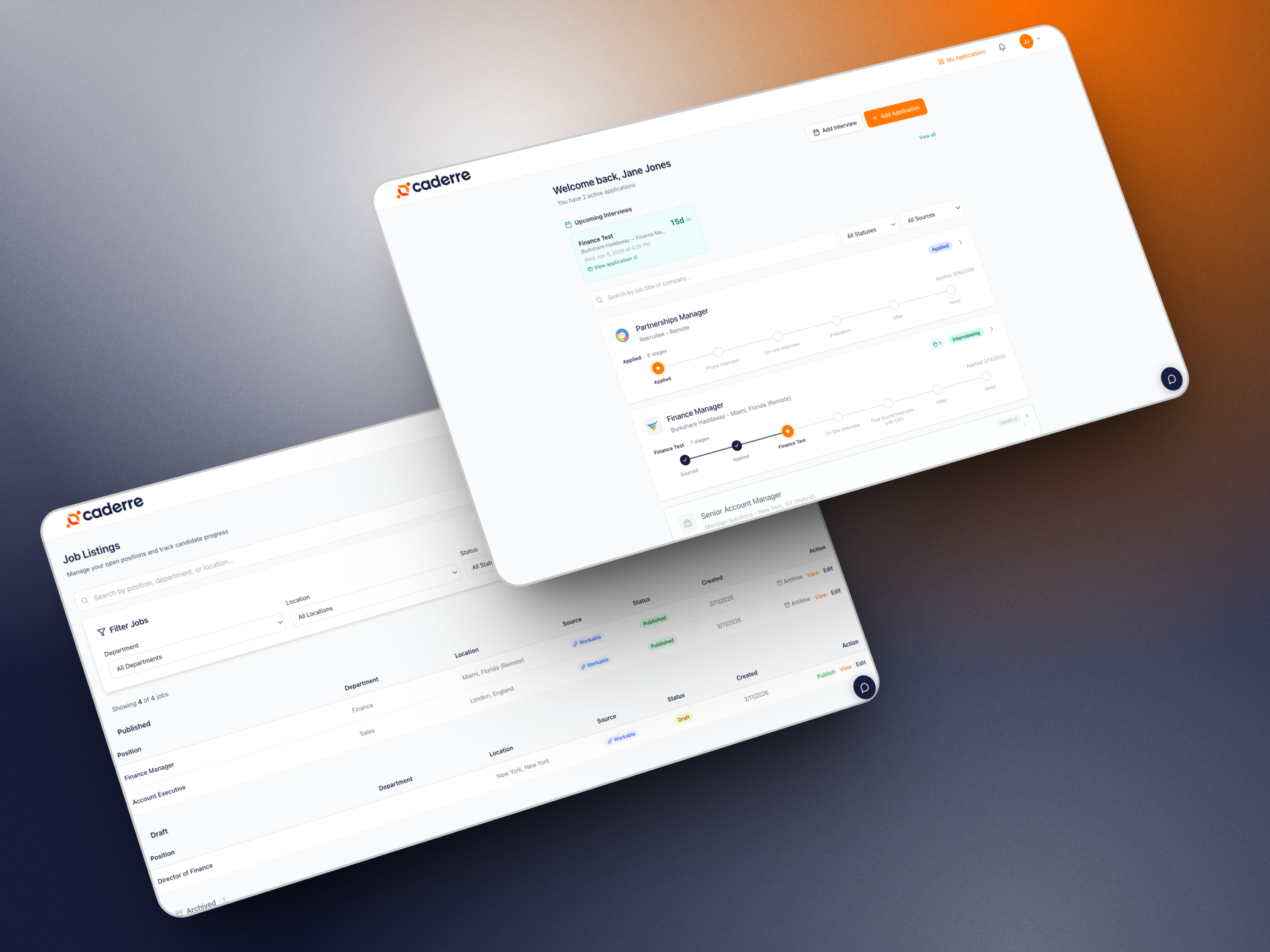
Caderre connects your ATS to a candidate-facing dashboard, so applicants always know where they stand — automatically. See how it works →
See Caderre in action
Connect your ATS and give candidates real-time visibility into their application status. Free 14-day trial, no credit card required.
Start free trialShare this article