Your Next Hire Is a Candidate You Already Rejected
The strongest candidate for your next opening often already applied. Whether you can win them back is decided by how the last process ended.
Internal Team
Every role you fill produces more than one person worth hiring. One candidate gets the offer. The others clear your interviews, impress your panel, and lose on a narrow margin. Then they go back into your applicant tracking system and are never contacted again.
When a similar role opens a few months later, most teams start sourcing from zero. They post the job, screen a new pile of resumes, and rebuild a pipeline they already had. The strongest candidate for the new opening often applied for the last one.
These runners-up have a name. Recruiters call them silver medalists, and re-engaging them is one of the fastest and cheapest paths to a quality hire. Whether that pool is an asset or a dead end comes down to one thing: how the first process ended.
The Pre-Vetted Talent You Already Paid to Find
A silver medalist is a finalist who nearly got the offer. They passed your screens. They sat through your interviews. They were qualified enough to reach the final round, and interested enough to stay in the process to the end. In sourcing terms, they are the most expensive talent you will ever find, because you have already spent the time and money to vet them.
Yet the default recruiter instinct is to start every new search from scratch. The people already in the ATS were rejected once, so they get treated as a closed file. The result is a company that pays to source, screen, and interview the same caliber of talent again and again, while a warm pool of pre-vetted finalists sits untouched in the system.
Re-Engagement Is Earned, Not Automatic
A silver medalist is only valuable if they will take your call. That willingness is not a given. It is decided by how the last process treated them, and the deciding moment is the part most companies handle worst: the wait and the rejection.
The data is blunt. Eighty percent of candidates say they would not consider other roles at a company that never notified them of their outcome. Candidates who are told where they stand are 3.5 times more likely to reapply to a different position with the same employer, and talent is four times more likely to consider you again after receiving feedback.
Read those numbers the other way around. The rejection is not the end of the relationship. It is where the relationship is set. Handle it well and a near-miss candidate stays reachable. Handle it with silence and you close the door on the exact people you most want back.
Silence Is How the Pool Goes Cold
Most companies are not deciding to burn their silver medalists. They are letting them go cold by default, one non-reply at a time. Sixty-five percent of candidates say they rarely or never receive an update on their application. A finalist who hears nothing does not file the experience under “maybe next time.” They file it under “never again.”
The damage does not stop with one candidate. A rejected finalist who was treated well becomes a referral source. Sixty-six percent of candidates say a positive experience makes them more likely to refer others, rising to 79 percent when the experience is exceptional. Silence shrinks your pool twice: it loses the candidate, and it loses everyone that candidate would have sent your way.
The thing that keeps a silver medalist warm is not a clever re-engagement campaign a year later. It is whether they left the process knowing where they stood.
How Caderre Helps
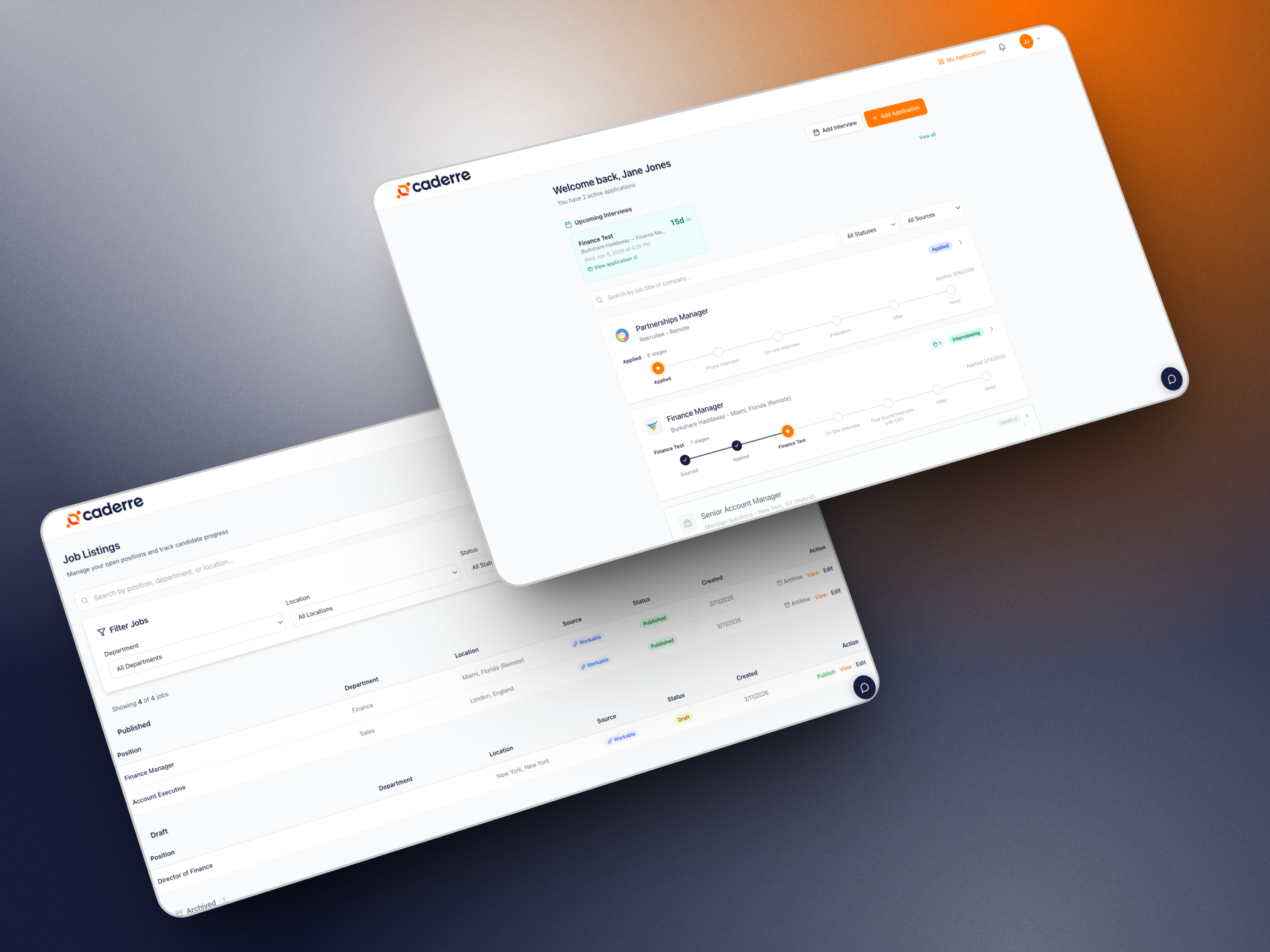
Caderre connects your ATS to a candidate-facing dashboard, so every applicant can see where they stand in real time, through the whole process and including the outcome. No black hole. No candidate left guessing whether the door is closed.
That visibility is what protects the pool. The strong candidate you could not hire this quarter leaves with a clear, respectful experience instead of silence. Months later, when a matching role opens, they are still someone who will answer. Transparency is not only good manners. It is how you keep the talent you already spent the money to find.
See Caderre in action
Connect your ATS and give candidates real-time visibility into their application status. Free 14-day trial, no credit card required.
Start free trialShare this article