Every Rejected Candidate Is Also a Customer
You reject most of the people who apply. Many of them are customers. Silence during hiring carries a revenue cost, and it is bigger than most teams realize.
Internal Team
Most companies reject the overwhelming majority of the people who apply to them. For a single open role, it is common for more than 80% of applicants to never make it past the first screen. That part is unavoidable. What is avoidable is treating rejected candidates as if they vanish. They do not. Many of them are your customers, and some of them are about to decide whether to stay that way.
The link between how you treat candidates and how much they spend with you is not theoretical. It has a number attached to it.
The Virgin Media Math
The most cited example in recruiting is still the clearest. When Virgin Media analyzed its rejected applicants, it found that thousands of them were existing subscribers who canceled after a poor hiring experience. The estimated cost was roughly $5.4 million in lost revenue per year, calculated from a single recruitment channel. These were not strangers venting online. They were paying customers who quietly closed their accounts.
The mechanism is simple. A candidate applies, waits, hears nothing, and forms an opinion. If that candidate already pays you every month, the opinion has somewhere to go. Recent data backs this up: 56% of candidates say a bad hiring experience makes them less likely to buy from that company. For any business that sells to consumers, that is a direct line from the applicant tracking system to the revenue line.
Silence Does Not Stay Private
A rejected candidate who feels ignored rarely keeps it to themselves. Around 72% of candidates share a negative experience online or directly with their network, and 27% will actively discourage other people from applying. That damage compounds, because the next round of applicants reads it before they decide whether to bother with you at all.
Candidates now check your reputation the same way they check a product before buying it. 83% of job seekers look at reviews and ratings before they apply. A pattern of silence turns into a pattern of reviews, and those reviews shrink your future pipeline. The candidate you ignored today quietly costs you three applications next quarter.
The Problem Is Scale, Not Intent
Very few recruiting teams want to ghost anyone. The reason it happens is math. When one role draws hundreds of applicants and more than 80% will be rejected, no one has the hours to send a personal update to each of them. So the default becomes silence, and silence is exactly what candidates read as disrespect.
Post-interview ghosting is the sharpest version of this. 61% of candidates report being ghosted after an interview, up nine points from the prior year. Those are the people who invested the most time, which makes them the most likely to remember it and the most likely to act on it. Every one of them left the process with a status they were never given.
How Caderre Helps
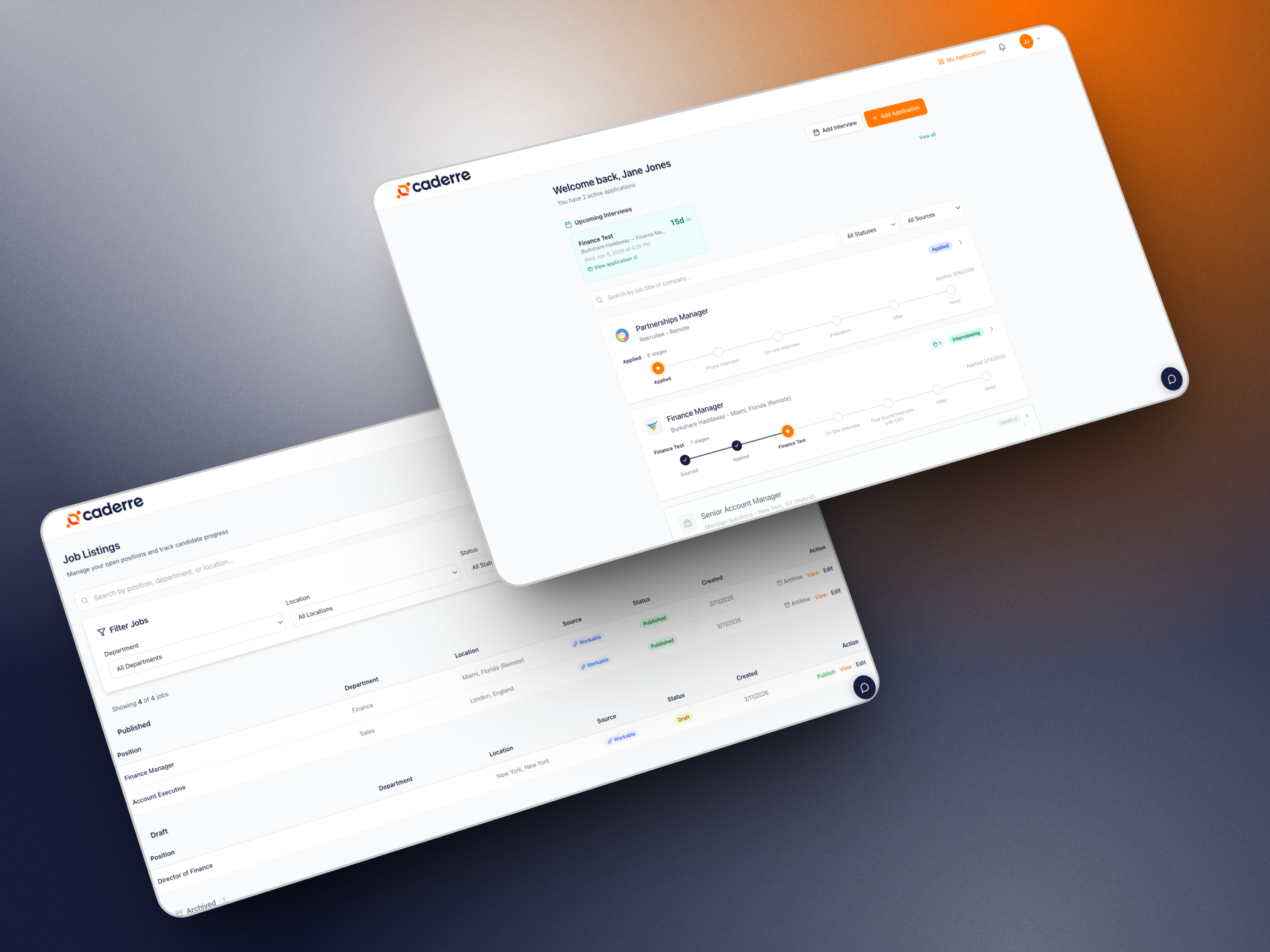
Caderre connects directly to your applicant tracking system and gives every candidate a real-time dashboard showing exactly where they stand. When a candidate moves to a new stage, or is no longer under consideration, they see it without having to email anyone and without a recruiter having to write a single message.
That closes the gap that costs companies customers. Candidates get clarity instead of silence, even when the answer is no. Recruiters keep their hours. And the people you reject leave with a clear picture of a company that respected their time, which is the difference between a customer who stays and a customer who quietly cancels.
Rejection is part of hiring. Silence does not have to be.
See Caderre in action
Connect your ATS and give candidates real-time visibility into their application status. Free 14-day trial, no credit card required.
Start free trialShare this article