The Candidate Experience Metrics That Actually Matter
Most teams measure candidate experience with a survey sent after the offer is already won or lost. Here are the signals that actually predict whether candidates accept, and how to see them while the process is still underway.
Internal Team
Most teams find out their candidate experience was bad the same way they find out about most problems: too late. A survey after the offer is declined. A comment in an exit interview. A one-star review that surfaces on Glassdoor weeks after the candidate walked away. By the time the data arrives, it is a post-mortem, not a lever.
And the stakes are not soft. In recent research, 66% of candidates said a positive experience influenced their decision to accept an offer, while 47% said poor communication alone would make them withdraw from a process entirely. Candidate experience does not just shape how people feel about you. It decides who accepts.
So the real question is not whether candidate experience matters. It is whether you can measure it while there is still time to change the outcome.
Why Most Candidate-Experience Measurement Comes Too Late
The default way to measure candidate experience is a survey sent after the process ends. It feels rigorous, but it has three problems built in.
It is lagging. By the time someone rates their experience, the offer is already accepted or already gone, and nothing you learn can be applied to that candidate.
It is self-selecting. The people most likely to respond sit at the extremes, so the quiet middle of your pipeline, where most candidates live, goes unmeasured.
And it measures the wrong moment. Surveys ask how people felt. They rarely capture what actually drove the feeling, which is almost always communication. 65% of candidates say they have not received consistent communication throughout a hiring process. That gap happens in real time, days or weeks before any survey goes out.
If you want to improve candidate experience, you need leading indicators you can see during the process, not a grade you receive after it.
The Metrics That Actually Predict Outcomes
A handful of signals, tracked while the process is still underway, tell you far more than a post-process score. These are the ones worth watching.
Time to first update. Speed is a competitive signal, not just a courtesy. 75% of candidates expect to hear back within two weeks of applying, and more than half expect it within one week. The gap between application and first response is one of the earliest and most reliable predictors of whether a candidate stays engaged.
Silence gaps between stages. The danger is rarely a single slow step. It is the stretch of quiet where a candidate hears nothing at all. Roughly 62% of candidates lose interest in a role after two weeks with no update following an interview. Measuring the longest silence in each candidate’s journey surfaces the risk before they disengage.
Withdrawal rate by stage. When candidates drop out, where they drop out is the diagnosis. A cluster of withdrawals after one specific stage almost always points to a communication gap at that step, not a problem with the candidates themselves.
Demand for status. When candidates keep looking for an update they cannot find, that is measurable interest going unmet. 81% of job seekers say regular status updates would significantly improve their experience. If people are actively checking for information you are not giving them, that is a signal, and a solvable one.
How Caderre Turns These Into Real-Time Signals
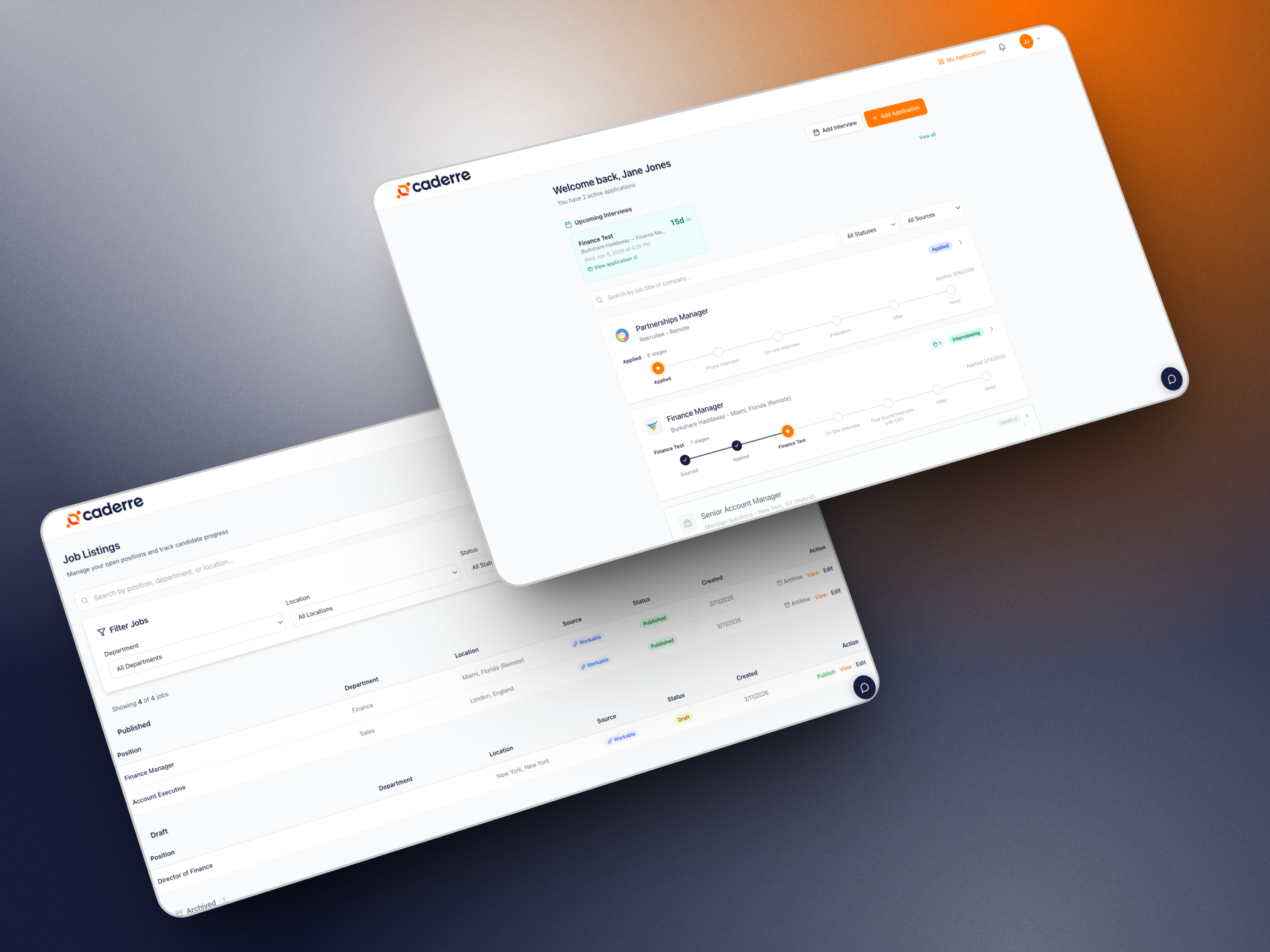
Every metric above depends on one thing: visibility into what candidates are experiencing while it is happening. That is exactly what Caderre is built to provide.
Caderre connects to your ATS and gives every candidate a real-time status page, so the silence gap that drives most withdrawals simply closes. Candidates can see where they are, what comes next, and how to prepare, without emailing a recruiter to ask.
On the team side, that same visibility becomes data. You can see when candidates check their status and how often, which turns demand for status from a guess into a number. You can see where engagement drops off across the pipeline. The measurement stops being a survey you send later and becomes a signal you can act on now.
Candidate experience is not a feeling you grade after the fact. It is a set of signals you can watch in real time and fix while it still changes the outcome. See how it works →
See Caderre in action
Connect your ATS and give candidates real-time visibility into their application status. Free 14-day trial, no credit card required.
Start free trialShare this article