The Candidate Experience Gap: Why Your Hiring Process Looks Better From the Inside
Hiring managers rate the process +73. Candidates rate it far lower. Internal efficiency and candidate experience are two different numbers - and here is how to close the gap.
Internal Team
Ask a hiring team how their process is going and most will say it is going well. Ask the candidates moving through that same process and the answer is very different.
That gap is now measurable, and it is wider than most companies think.
The View From Inside Looks Great
Hiring Manager NPS rose to +73 in 2025, up from +65 two years earlier (Starred, 2026). Internal satisfaction is high and climbing. Hiring managers report clearer role alignment, better collaboration with recruiters, and more structured processes than they have had in years.
By every internal measure, hiring is working. The people who build and run the process feel good about it.
The View From Outside Does Not
The candidates going through that same process see something else. In the same dataset, rejected candidates rated their experience at -7, and the global candidate score sat at +17 and did not move year over year (Starred, 2026).
Only 26% of North American job seekers say they had a great candidate experience (JobScore, 2026). Three out of four walk away feeling the process was, at best, forgettable.
That is the gap. Strong on the inside, disappointing from the outside.
Why the Two Numbers Disagree
The disconnect is not about effort. Hiring teams are more organized than ever. The problem is that internal clarity stops at the edge of the organization.
Recruiters and hiring managers know exactly where every candidate stands. That information lives in the ATS. It just never reaches the person it is about. The candidate sees none of the structure the team is so satisfied with.
It shows up most in expectations. 37.8% of candidate comments reference expectation setting, and 74.5% of those are negative (Starred, 2026), making it the single most negatively perceived part of the process. Unclear timelines, no sense of what comes next, no word after applying.
And most candidates never reach a human at all. Nearly 69% of rejected candidates are filtered out at the application stage (Starred, 2026). For the majority of applicants, the application step is the entire experience. When that step is silent, silence becomes the brand.
Efficiency Is Not the Same as Experience
This is the part that catches teams off guard. Making the process faster and more structured raises the internal score. It does not automatically raise the candidate one.
A cleaner pipeline, quicker screening, and tighter internal alignment all make the hiring team’s job easier. None of it is visible to the candidate. From the outside, a highly optimized process and a chaotic one can look identical: an application submitted, a confirmation email, then nothing.
Internal efficiency and candidate experience are two different metrics. Improving one does not move the other unless the clarity is deliberately shared.
Closing the Gap
The fix is not a new policy or more headcount. It is extending the visibility the hiring team already has to the people on the other side of the process.
When candidates can see where they stand, what stage they are in, and what comes next, the experience stops feeling arbitrary. Even a rejection reads as fair when the process was clear. The information already exists. It just has to reach the candidate.
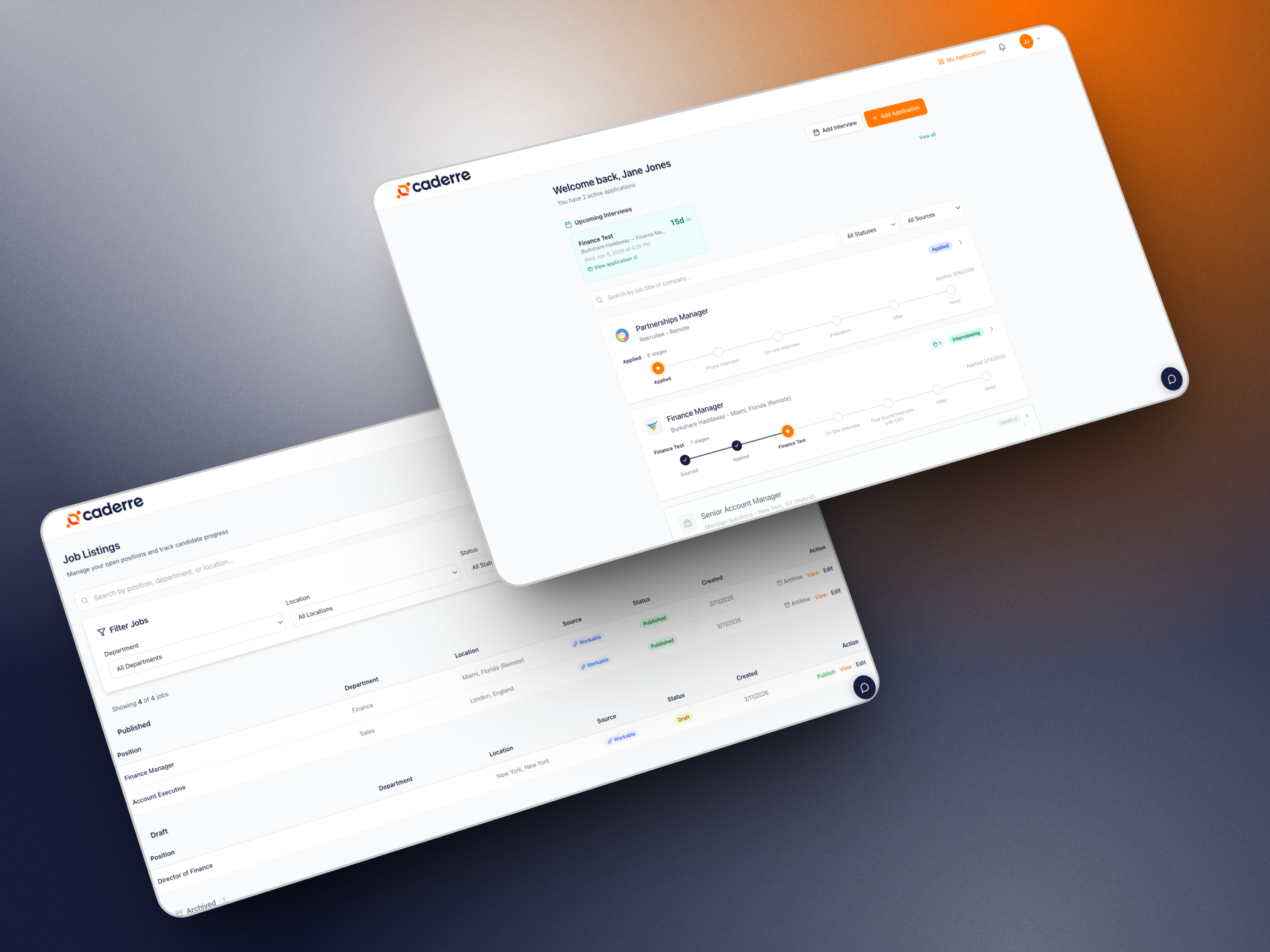
Caderre connects your ATS to a candidate-facing dashboard, giving applicants real-time visibility into where they stand, automatically. The process your team already feels good about becomes one your candidates do too. See how it works →
See Caderre in action
Connect your ATS and give candidates real-time visibility into their application status. Free 14-day trial, no credit card required.
Start free trialShare this article